Japchae Korean Glass Noodle Stir Fry – Easy Recipe
Japchae (Korean Glass Noodle Stir Fry) is more than just a dish; it’s an experience. Imagin extracte vibrant colors dancing on your plate – translucent noodles glistening, crisp vegetables offering a delightful crunch, and tender pieces of marinated protein creating a symphony of textures and flavors. This beloved Korean classic, Japchae, has captured hearts and taste buds worldwide for good reason. Its inherent versatility allows for endless customization, making it a favorite for family gatherings, festive celebrations, or simply a satisfying weeknight meal. What truly sets Japchae apart is the delicate balance of sweet, savory, and umami notes, all woven together by the delightfully chewy, slightly slippery glass noodles. It’s a dish that feels both comforting and elegantly sophisticated, a testament to the beauty of Korean home cooking.
Ready to bring this delightful Korean staple into your own kitchen?
Follow along as we guide you through creating your own perfect Japchae.
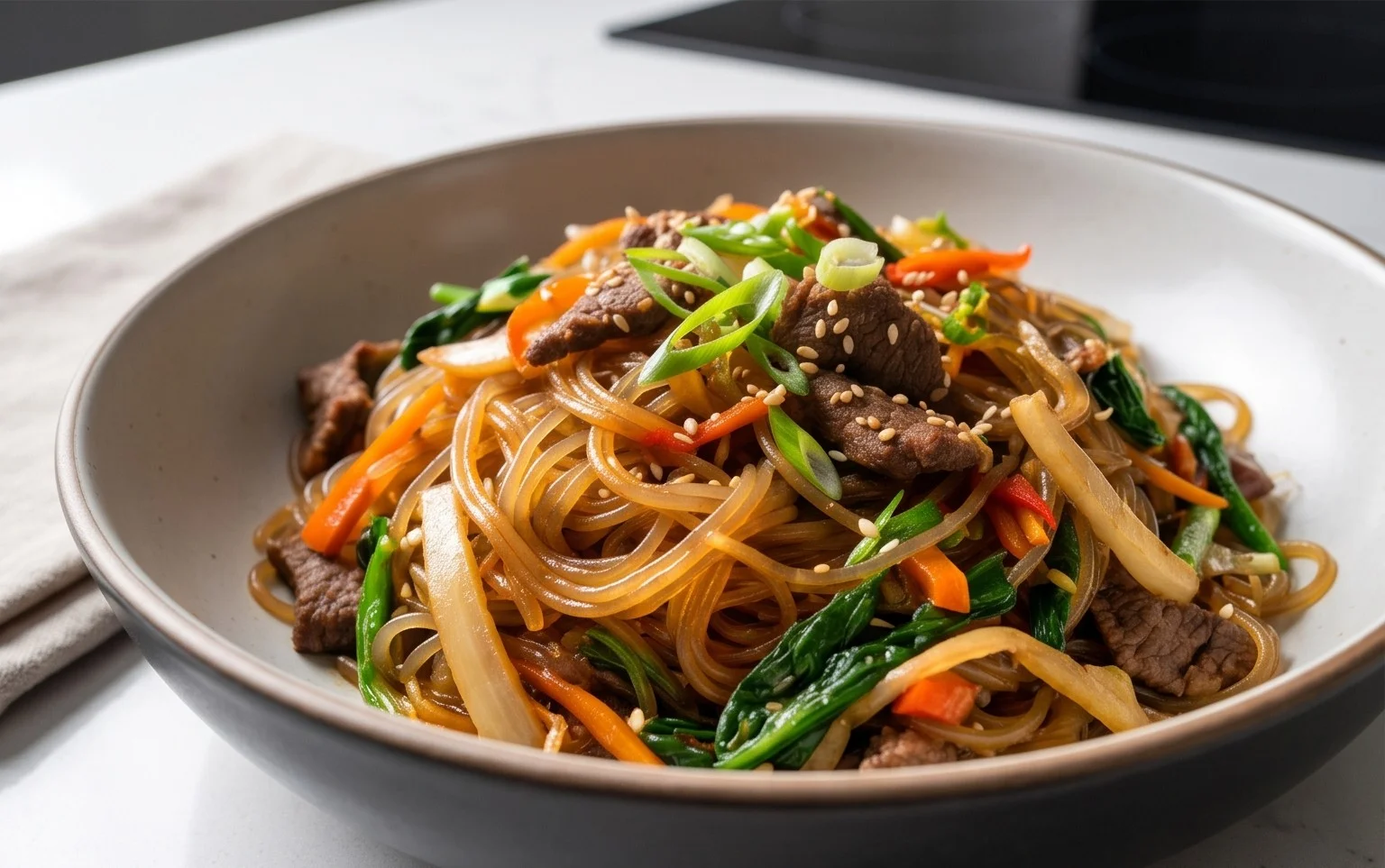
Japchae (Korean Glass Noodle Stir Fry)
Japchae is a beloved Korean dish, a symphony of textures and flavors that is both elegant and incredibly satisfying. It’s a celebration dish, often found at birthdays, holidays, and gatherings, but it’s also perfect for a weeknight meal when you’re craving something special. The star of the show is the slippery, slightly chewy sweet potato glass noodles, stir-fried with a colorful medley of vegetables and savory marinated beef. The balance of sweet, savory, and nutty sesame oil creates a truly addictive flavor profile. Making Japchae at home might seem a little involved with all the separate components, but I promise, it’s totally manageable and the reward is absolutely worth it. Let’s get cooking!
Ingredients:
Cooking Instructions
Prepare the Noodles and Vegetables
The first step to a great Japchae is getting all your ingredients prepped and ready to go. This dish comes together quite quickly once you start stir-frying, so having everything chopped, sliced, and measured will make the process smooth and enjoyable.
1. Cook the Glass Noodles: Bring a large pot of water to a rolling boil. Add the sweet potato glass noodles and cook according to package directions, usually around 6-8 minutes, until they are tender but still have a pleasant chew. Be careful not to overcook them, as they can become mushy. Once cooked, drain the noodles thoroughly in a colander. Rinse them briefly with cold water to stop the cooking process and prevent them from sticking together. Set aside. You can toss them with a tiny bit of sesame oil at this stage if you like, to keep them loose.
2. Marinate the Beef: In a medium bowl, combine the beef strips with 2 tablespoons of soy sauce, 1 tablespoon of brown sugar, and a pinch of black pepper. Mix well to ensure the beef is evenly coated. Let it marinate for at least 15-30 minutes at room temperature. This will tenderize the beef and infuse it with flavor.
3. Prepare the Vegetable Components: While the beef marinates, focus on your vegetables. In a separate bowl, toss the julienned carrot with a pinch of salt and a drizzle of oil. In another bowl, toss the sliced yellow onion with a pinch of salt and a drizzle of oil. Do the same for the sliced mushrooms, seasoning them lightly with salt and oil. This pre-seasoning helps to bring out the natural sweetness of the vegetables and ensures they are cooked evenly.
4. Cook the Egg Crepes: This is a classic element of Japchae. In a small bowl, whisk the two eggs with a pinch of salt. Heat a lightly oiled non-stick skillet over medium-low heat. Pour in about ¼ of the beaten egg mixture and swirl the pan to create a thin, even crepe. Cook until set, then carefully flip and cook the other side for about 30 seconds. Slide the crepe onto a plate and repeat with the remaining egg mixture. Once cooled, stack the crepes and slice them into thin ribbons. Set aside.
Stir-Frying the Components
Now comes the fun part – bringin extractg all these beautifully prepared ingredients together!
5. Cook the Beef and Vegetables Separately: Heat about 1 tablespoon of oil in a large skillet or wok over medium-high heat. Add the marinated beef and stir-fry until browned and cooked through, about 3-5 minutes. Remove the beef from the skillet and set aside. Add a little more oil to the skillet if needed. Stir-fry the seasoned carrots for about 2-3 minutes until slightly tender-crisp. Remove and set aside. Repeat this process with the seasoned yellow onion, cooking until softened and slightly caramelized, about 3-4 minutes. Remove and set aside. Finally, stir-fry the seasoned mushrooms until tender and their moisture has evaporated, about 3-4 minutes. Remove and set aside. You’ll be amazed at how vibrant each component looks!
6. Blanch the Spinach and Green Onions: In the same pot you used for the noodles (or a fresh one), bring a small amount of water to a boil. Briefly blanch the baby spinach, just for about 30 seconds until it wilts. Immediately drain it and squeeze out any excess water. In the same boiling water, quickly blanch the green onion pieces for about 15-20 seconds. Drain well. This brief cooking softens them and intensifies their flavor without making them mushy.
Assembling the Japchae
The final stage is where all the magic happens. We’ll combine everything into a delicious, cohesive dish.
7. Combine and Sauce: In a very large bowl, or back in your wok/skillet if it’s large enough, combine the cooked glass noodles, cooked beef, cooked carrots, cooked yellow onion, cooked mushrooms, blanched spinach, blanched green onions, and sliced egg crepes. In a separate small bowl, whisk together the remaining soy sauce (5 tablespoons), honey (3 tablespoons), brown sugar (2 tablespoons), and toasted sesame oil (2 tablespoons). Pour this sauce mixture over the noodle and vegetable mixture. Gently toss everything together using tongs, ensuring all the ingredients are evenly coated with the sauce. Taste and adjust seasoning with salt and pepper if needed.
8. Final Touches and Serving: Heat a tablespoon of oil in a large skillet or wok over medium-high heat. Add the combined Japchae and stir-fry for another 2-3 minutes, tossing frequently, to allow the flavors to meld and the noodles to become slightly more glossy. Transfer the Japchae to a serving platter. Garnish with toasted sesame seeds if desired. Serve hot and enjoy the delightful textures and savory-sweet flavors of your homemade Japchae! This dish is best enjoyed fresh, but leftovers can be stored in the refrigerator for a day or two.
Conclusion:
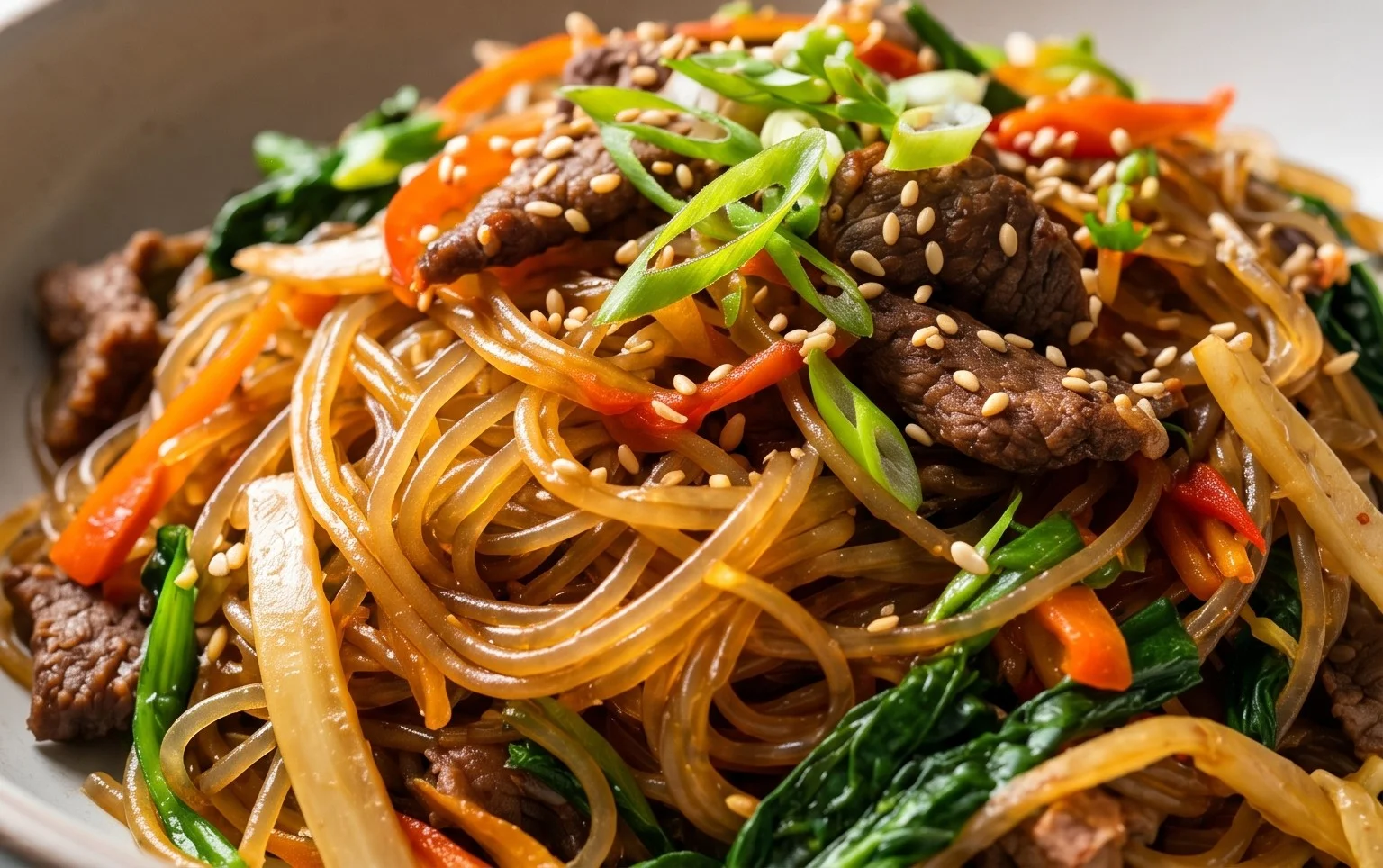
So there you have it – a comprehensive guide to making delicious Japchae, that wonderfully savory and slightly sweet Korean glass noodle stir-fry! I hope you’ve enjoyed learning how to create this vibrant and satisfying dish. Japchae truly shines because of its delightful textures, from the chewy glass noodles to the crisp vegetables, all coated in a rich, umami-packed sauce. It’s a fantastic centerpiece for any meal, and I can’t recommend it enough for you to try in your own kitchen.
This recipe is incredibly versatile. Serve your freshly made Japchae hot as a main course, or let it cool slightly to enjoy as a flavorful side dish. It pairs beautifully with grilled meats like bulgogi or simple steamed rice. Feel free to get creative with your vegetable choices; while the recipe provides a classic lineup, you can absolutely swap in your favorites like broccoli florets, snow peas, or even shiitake mushrooms for an extra earthy flavor. For a heartier meal, consider adding thinly sliced beef or tofu. Don’t be afraid to experiment and make this Japchae recipe your own!
Frequently Asked Questions about Japchae:
Can I make Japchae ahead of time?
Yes, you can! Japchae is a great make-ahead dish, perfect for meal prepping or for parties. However, it’s best to cook the noodles and vegetables separately and then combine them with the sauce just before serving, or shortly beforehand. If you combine everything too far in advance, the noodles can become a bit sticky. Reheat gently on the stovetop or in the microwave, adding a splash of water or broth if needed to loosen the noodles.
What kind of noodles are best for Japchae?
The traditional noodle for Japchae is called dangmyeon, which are sweet potato starch noodles. These noodles have a unique chewy texture and absorb the sauce beautifully. If you can’t find dangmyeon, other types of glass noodles, like mung bean or tapioca starch noodles, can be used, but they might have a slightly different texture. Always follow the package instructions for cooking time as they can vary.
Japchae (Korean Glass Noodle Stir Fry)
A vibrant and flavorful Korean stir-fry featuring chewy glass noodles, tender beef, and a medley of colorful vegetables.
Ingredients
-
12 ounces sweet potato glass noodles
-
16 ounces beef (cut into strips, such as flank, skirt, or ribeye)
-
2 large eggs, beaten
-
1 large carrot, peeled and julienned
-
1 medium yellow onion, thinly sliced
-
3 mushrooms, thinly sliced
-
2 cups baby spinach, packed
-
2 stalks green onion, cut into 1 inch pieces
-
oil, for cooking
-
Toasted sesame seeds (optional for garnish)
-
Salt and black pepper, as needed
-
7 tablespoons soy sauce (light sodium)
-
3 tablespoons honey
-
2 tablespoons brown sugar
-
2 tablespoons toasted sesame oil
Instructions
-
Step 1
Cook glass noodles according to package directions. Rinse with cold water, drain, and toss with 1 tablespoon of toasted sesame oil and a pinch of salt. Set aside. -
Step 2
In a small bowl, whisk together soy sauce, honey, brown sugar, and the remaining toasted sesame oil to make the sauce. Set aside. -
Step 3
Heat a large skillet or wok over medium-high heat. Add a tablespoon of oil and cook the beef until browned. Season with salt and pepper. Remove beef from skillet and set aside. -
Step 4
Add a little more oil to the skillet if needed. Stir-fry the onions and carrots for 2-3 minutes until slightly softened. Add the mushrooms and cook for another 2 minutes. -
Step 5
Push the vegetables to one side of the skillet. Pour the beaten eggs into the empty space and cook, stirring, until scrambled. Break up the scrambled egg and mix it with the vegetables. -
Step 6
Add the cooked glass noodles and beef back into the skillet with the vegetables. Pour the prepared sauce over everything and toss to combine, ensuring all ingredients are evenly coated. Cook for 2-3 minutes, stirring, until heated through. -
Step 7
Stir in the baby spinach and green onions. Cook for an additional minute, or until the spinach is wilted. -
Step 8
Taste and adjust seasoning with salt and pepper if necessary. Serve immediately, garnished with toasted sesame seeds if desired.
Important Information
Nutrition Facts (Per Serving)
It is important to consider this information as approximate and not to use it as definitive health advice.
Allergy Information
Please check ingredients for potential allergens and consult a health professional if in doubt.