Easy French Macaron Recipe-Perfect French Cookies
French macaron recipes often seem daunting, whispered about in hushed tones as the pinnacle of baking perfection. But what if I told you that those delicate, colorful, meringue-based cookies, with their crisp shells and chewy interiors, are more achievable than you think? The allure of the French macaron lies in its exquisite simplicity and elegant presentation. It’s a tiny jewel of a treat, a perfect bite that melts in your mouth, offering a delightful contrast in textures. Whether you’re dreaming of a vibrant rainbow display or a sophisticated monochromatic pnon-alcoholic alette, mastering a French macaron recipe allows you to create edible art. They are the star of any dessert table, a guaranteed showstopper that says you’ve truly mastered your craft. The joy of sharing these homemade treasures, watching the delight on someone’s face as they savor their first French macaron, is truly unparalleled.
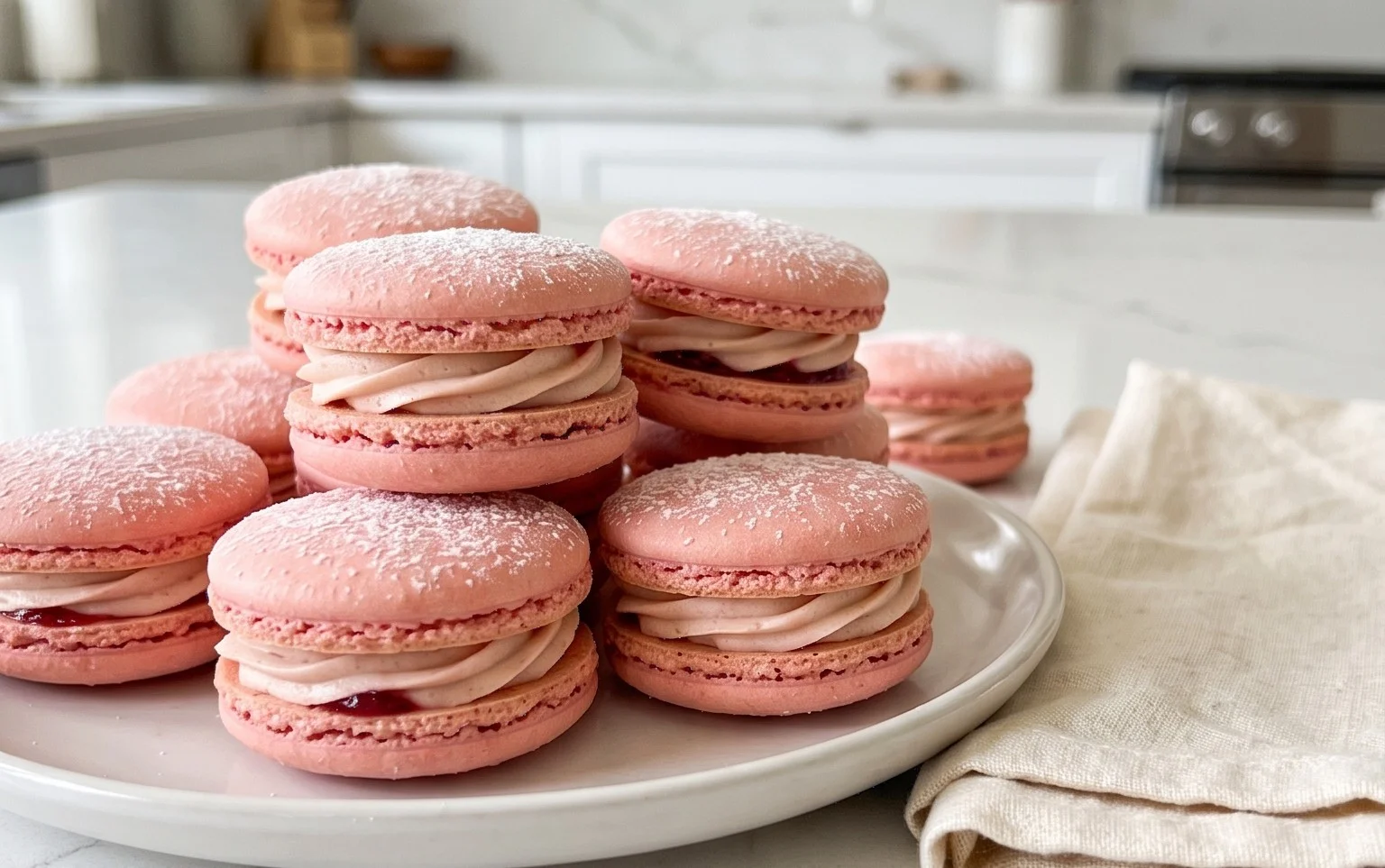
French Macaron Recipe
Ah, the French macaron. These delicate, colorful, and utterly delightful cookies are a testament to precision and patience in the kitchen. While they might seem intimidating, with the right recipe and a little guidance, you can absolutely achieve those perfectly smooth shells and delightful chewy interiors. Let’s embark on this delicious journey together!
Ingredients:
The Art of Preparation: Getting Started
Before we even think about mixing, let’s get our mise en place in order. This is crucial for macarons.
1. Sifting the Dry Ingredients: The Foundation of Smoothness
First, we’ll tackle the dry ingredients. In a medium bowl, combine your 150 grams of sifted super-fine almond flour with 180 grams of powdered sugar and 1/4 teaspoon of salt. The key here is to sift them together at least twice, if not three times. This step is non-negotiable for achieving those famously smooth macaron shells. Sifting removes any lumps and aerates the mixture, which helps prevent grainy textures. If you don’t have super-fine almond flour, you can pulse regular almond flour in a food processor for a few seconds (be careful not to over-process, as this can release oils and make it gummy), then sift it thoroughly. Measure your almond flour after sifting to ensure accuracy.
2. Preparing the Egg Whites: The Crucial Meringue Base
Now, let’s turn our attention to the egg whites. You’ll need 120 grams of large egg whites. It’s best to use egg whites that have been aged or left out at room temperature for a few hours, or even overnight in a covered container in the refrigerator (then bring them back to room temperature). This helps them whip up into a more stable meringue. Ensure there is absolutely no trace of yolk in your egg whites, as fat can prevent them from whipping properly. We’ll be using these in two parts: first to form a meringue, and then for the macaronage process.
Crafting the Meringue: The Sweet Ascent
This is where the magic of meringue comes in, providing structure and lift to our macarons.
3. Whipping the Meringue: Building Structure and Volume
In a clean, dry bowl of your stand mixer (or using a hand mixer), begin extract whipping the 120 grams of egg whites on medium-low speed. Once they become frothy, gradually add the 60 grams of granulated sugar, a little at a time, while continuing to whip. Increase the speed to medium-high and whip until you achieve stiff, glossy peaks. This means that when you lift the whisk, the peaks stand straight up without drooping. This can take anywhere from 5 to 10 minutes, depending on your mixer. If you’re using food coloring, add your 4 drops of liquid-gel food coloring (or more for a more vibrant hue) towards the end of the whipping process, just before you reach stiff peaks, and whip until the color is evenly distributed. Gel or liquid-gel food coloring is recommended as it contains less moisture than liquid food coloring.
The Macaronage: The Delicate Dance of Folding
This is arguably the most critical step in macaron making, requiring a gentle yet firm hand.
4. The Macaronage Technique: Achieving the Perfect Batter Consistency
Now, it’s time for the macaronage. Add the sifted dry ingredients (almond flour, powdered sugar, and salt mixture) to your meringue. Add the 1 teaspoon of pure vanilla extract at this stage as well. Using a rubber spatula, begin extract to fold the dry ingredients into the meringue. The technique here is crucial: scrape down the sides and bottom of the bowl, then bring the spatula up through the center of the batter, as if you’re drawing a “J” shape. Continue folding and scraping, rotating the bowl as you go. The goal is to deflate the meringue slightly and incorporate the dry ingredients until the batter flows like lava or thick ribbon – it should fall off the spatula in a thick, continuous stream and slowly melt back into itself within about 20-30 seconds. If the batter is too stiff, your macarons will be lumpy; if it’s too thin, they will spread too much. It’s better to slightly under-mix than over-mix at this stage.
Piping, Baking, and Filling: The Grand Finnon-alcoholic ale
The final stages bring our beautiful macarons to life.
5. Piping and Resting: Preparing for the Oven
Transfer the macaron batter to a piping bag fitted with a round tip (about 1/2 inch). Line two baking sheets with parchment paper or silicone baking mats. Pipe small, uniform rounds of batter onto the prepared baking sheets, leaving about an inch of space between each one. To help achieve consistent sizes, you can draw circles on the underside of your parchment paper as a guide. Once piped, firmly tap the baking sheets on your countertop several times. This helps to release any air bubbles trapped in the batter and encourages the shells to spread into smooth discs. After tapping, let the piped macarons rest at room temperature for 30-60 minutes, or until they form a skin. You should be able to lightly touch a macaron shell without any batter sticking to your finger. This skin is essential for developing those characteristic “feet” during baking.
6. Baking the Macarons: The Transformation
Preheat your oven to 300°F (150°C). Bake the macarons for 15-18 minutes. The exact baking time will vary depending on your oven. You’ll know they’re ready when the shells have developed their feet and appear set. They shouldn’t jiggle when you gently touch the top of a shell. If they are still soft, continue baking for another minute or two, checking frequently. Remove the baking sheets from the oven and let the macarons cool on the sheets for about 5 minutes before carefully transferring them to a wire rack to cool completely.
7. Assembling Your Masterpieces: The Sweet Conclusion
Once your macaron shells are completely cooled, it’s time to fill them! Pair up shells of similar size. Pipe a generous amount of your chosen filling, such as the Vanilla Buttercream Frosting, onto the flat side of one shell, then gently sandwich it with another shell. Don’t press too hard, or the filling will ooze out. For the best flavor and texture, it’s highly recommended to let your assembled macarons “mature” in an airtight container in the refrigerator for at least 24 hours before enjoying. This allows the filling to soften the shells, creating that perfect chewy interior.
Enjoy your homemade French macarons – a sweet reward for your dedication and a delightful treat for any occasion!
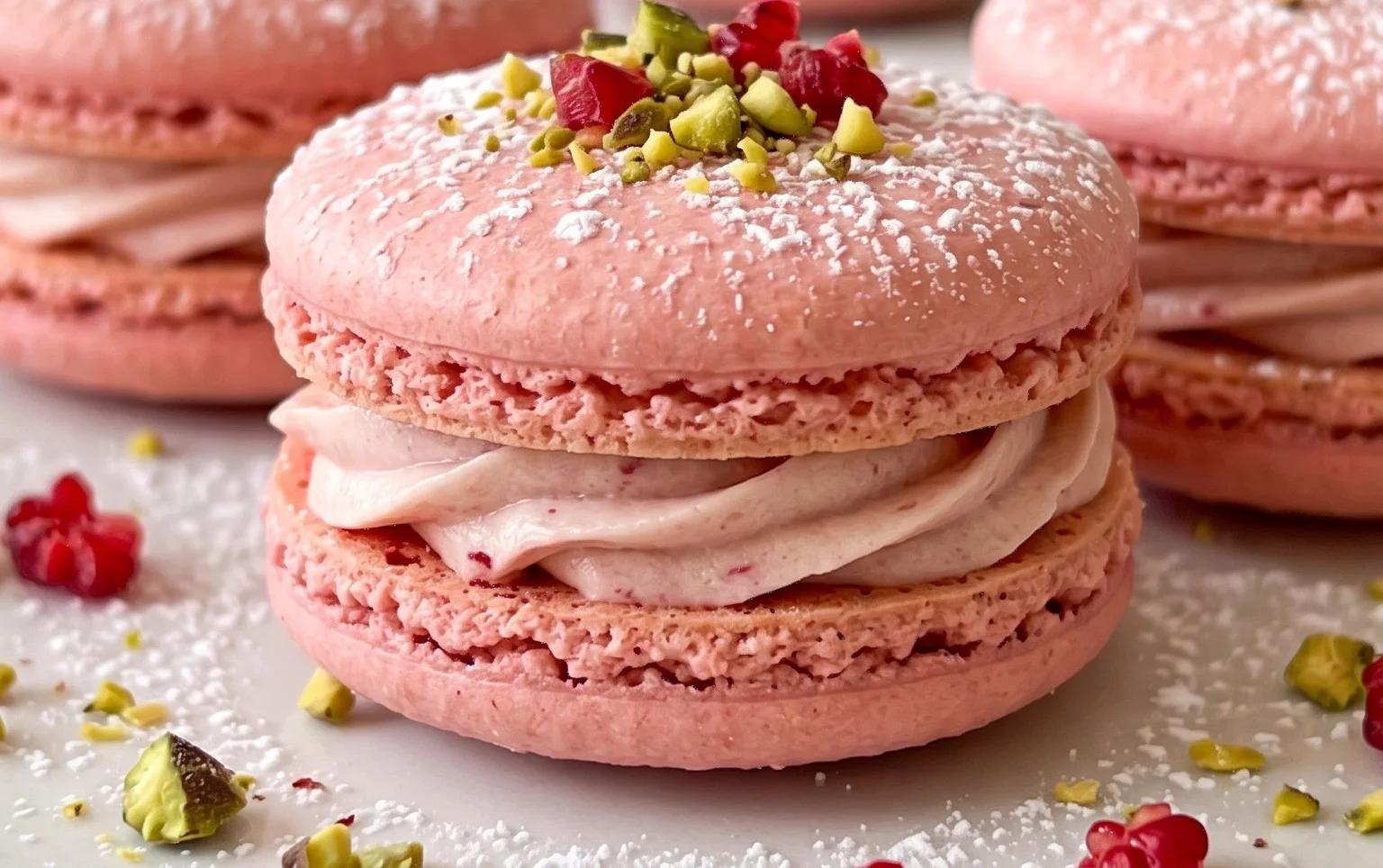
Conclusion:
You’ve now got the blueprint to create these delicate, delightful French macarons right in your own kitchen! This recipe is fantastic because it breaks down the seemingly complex process into manageable steps, demystifying the art of macaron making. With a little patience and precision, you’ll be rewarded with perfectly crisp shells that yield to a chewy interior, a truly magical experience. The sheer joy of pulling a batch of these beautiful treats from your oven is incredibly satisfying.
These French macarons are incredibly versatile. Enjoy them as a sophisticated dessert after a meal, a sweet afternoon pick-me-up with a cup of coffee or tea, or as show-stopping additions to any party or celebration. Think about gifting them in a beautifully arranged box – they’re always a welcome treat! Don’t be afraid to explore variations. Experiment with different food colorings to match themes, and get creative with fillings! Classic ganaches, fruit curds, or even simple buttercream can elevate your macarons to new heights. I truly encourage you to give this French macaron recipe a try. The journey is as rewarding as the delicious destination!
Frequently Asked Questions:
Why are my French macarons cracking?
Cracking often happens when the oven temperature is too high, or if the meringue wasn’t properly folded. Ensure your oven is calibrated, and be gentle when folding the dry ingredients into the meringue to avoid deflating it.
What is the best way to store French macarons?
Store your finished macarons in an airtight container in the refrigerator for up to 3-4 days. They actually taste even better after a day, allowing the flavors of the filling to meld with the shells.
French Macaron Recipe
A classic recipe for delicate French macarons with a crisp shell and chewy interior. This recipe yields approximately 24 macarons.
Ingredients
-
150 grams sifted super-fine almond flour
-
180 grams powdered sugar
-
1/4 teaspoon salt
-
120 grams large egg whites (at room temperature)
-
60 grams granulated sugar
-
4 drops liquid-gel food coloring
-
1 teaspoon pure vanilla extract
Instructions
-
Step 1
Whisk together sifted almond flour, powdered sugar, and salt. Set aside. In a clean bowl, beat egg whites until foamy. Gradually add granulated sugar, beating until stiff, glossy peaks form. Mix in food coloring and vanilla extract. -
Step 2
Gently fold the dry ingredients into the meringue in two additions, until the batter reaches a lava-like consistency (when you lift the spatula, the batter should fall in a thick ribbon and slowly melt back into itself). -
Step 3
Transfer the batter to a piping bag fitted with a round tip. Pipe small rounds onto baking sheets lined with parchment paper or silicone mats, leaving about an inch between each macaron. -
Step 4
Tap the baking sheets firmly on the counter several times to release air bubbles. Let the macarons sit at room temperature for 30-60 minutes, or until a skin forms and they are no longer sticky to the touch. -
Step 5
Preheat oven to 300°F (150°C). Bake for 12-15 minutes, or until the macarons have developed ‘feet’ and the shells are firm to the touch. -
Step 6
Let the macarons cool completely on the baking sheets before carefully peeling them off. Once cooled, pair macarons of similar size and fill with your choice of frosting.
Important Information
Nutrition Facts (Per Serving)
It is important to consider this information as approximate and not to use it as definitive health advice.
Allergy Information
Please check ingredients for potential allergens and consult a health professional if in doubt.